From the mind of Jeppe Carlsen, lead gameplay designer of INSIDE and LIMBO, comes Cocoon. A fantastic puzzle game that explores one core principle – the ability to enter worlds within other worlds – all through a clever, well-thought out orb system., that sees players manipulate different worlds in order to solve puzzles and progress through the game.
Those orbs are introduced right away, with your little Cicada character being dragged out of the starting area and into a whole new location. In front of you sits a orange sphere that just so happen to contain the world you were just in, weird right? Pick up this orb and you’ll realise you can use it to interact with the environment around you, these are the foundations that Cocoon is built upon, and you’ll be spending a lot of time manipulating the environments around you through various orb-based interactions.
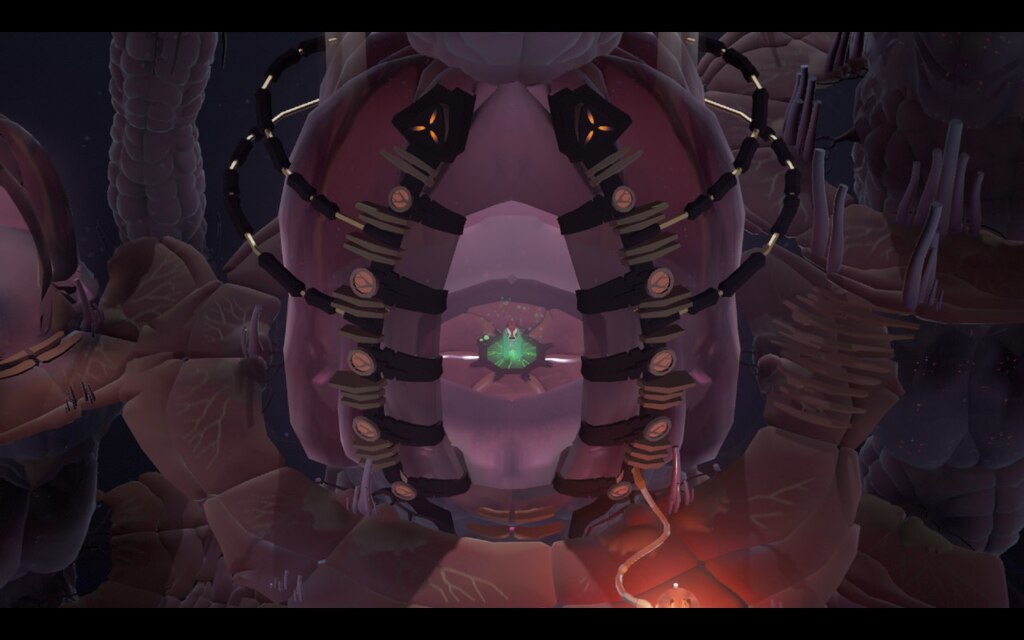
Across your adventure you’ll encounter several different orbs that both contain their own world, and also possess different abilities that can be used to progress through your journey. One unlocks hidden paths for example, whereas another one can change the state of certain platforms from gaseous to solid. It’s a fascinating way to provide players with abilities, and allows Cocoon to come up with some ingenious puzzle solutions that rely on you not having access to certain orbs, something which is prevalent in the final stages and makes for some amazing lightbulb moments.
Don’t forget each orb is its own world too, and there will be plenty of hopping between each one as you progress, it’s a remarkably clever mechanic, and watching the Cicada fly in and out of each orb never gets old. Inserting orbs inside of others quickly becomes a common part of many puzzle solutions, and is other intelligent way that Cocoon diversifies its approach puzzles without expecting the player to take on new skills or ideas. It often leads to rather mind-bending puzzle solutions where you have to place the orbs in certain orders within one another to reach a solution, doing so by using the knowledge you’ve picked up previously to ensure finishing a puzzle never feels too finicky or out of reach.
It’s not the only clever bit of design in Cocoon, as you’ll often, without realising, discover that the doors behind them have been slammed shut, preventing you from backtracking and keeping your focus on the puzzle ahead. It’s a super intelligent way of pushing players forward, and ensures that there’s no opportunity for them to think they’re missing something from a previous area.
These kind of design choices highlight how much care and attention have been placed into every aspect of Cocoon, something which is even more obvious when you realise that all guidance within the game is provided non-verbally. Paying attention to your environment will make most puzzles easy enough to understand, you’ll often find that observing the world around you provides answers and explanations, then it’s just a case of executing the solution.
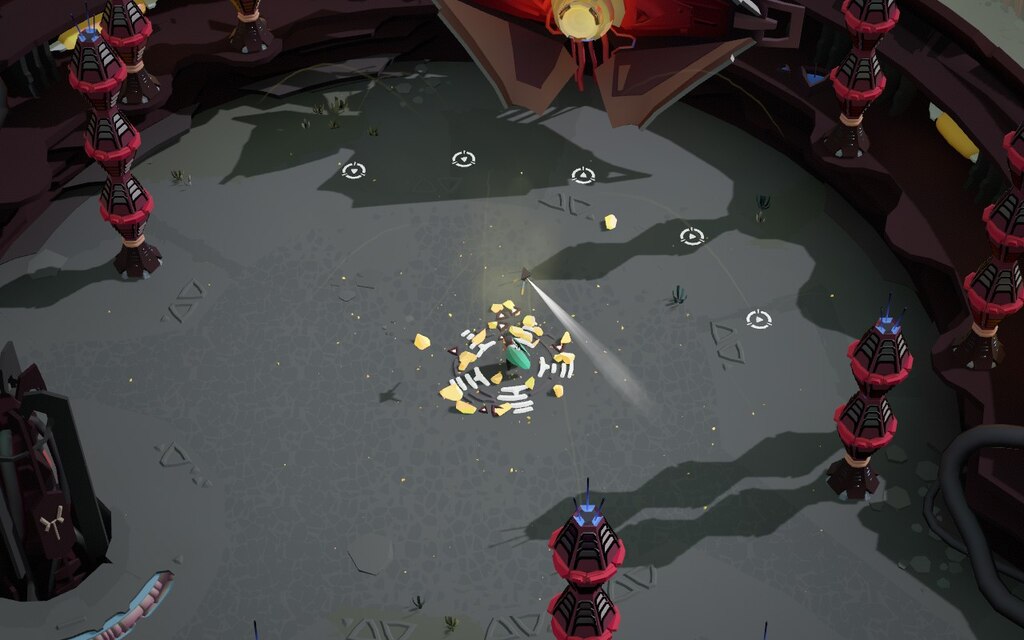
Luckily, enacting those solutions is usually dependent solely on your brain power, with a intuitive control scheme that channels all inputs through one button stopping things from becoming too complex. It also makes Cocoon a fairly accessible game too, which is never a bad thing! All you need to get this through one is a keen mind and a two button inputs: one to control your character, and the other to interact with things.
Things can get a bit more frantic on occasion, mainly evident in Cocoon’s version of a ‘boss fight’ that will pop up at the conclusion of each major section and present one final puzzle before you can move on to the next chapter. Each of these encounters relies on the players ability to figure out the bosses pattern, and then act accordingly, making use of a variety of mechanics that are reinterpretations of mechanics players will already be familiar with.
I found these really enjoyable ways to conclude each chapter within Cocoon, but I question the decision to present these more ‘actiony’ sequences in what is otherwise a very slow-paced experience. It doesn’t feel all that jarring because the mechanics of these encounters are entrenched in those used in the wider game too, but it’s the huge swing in the speed of player actions that could cause some issues.
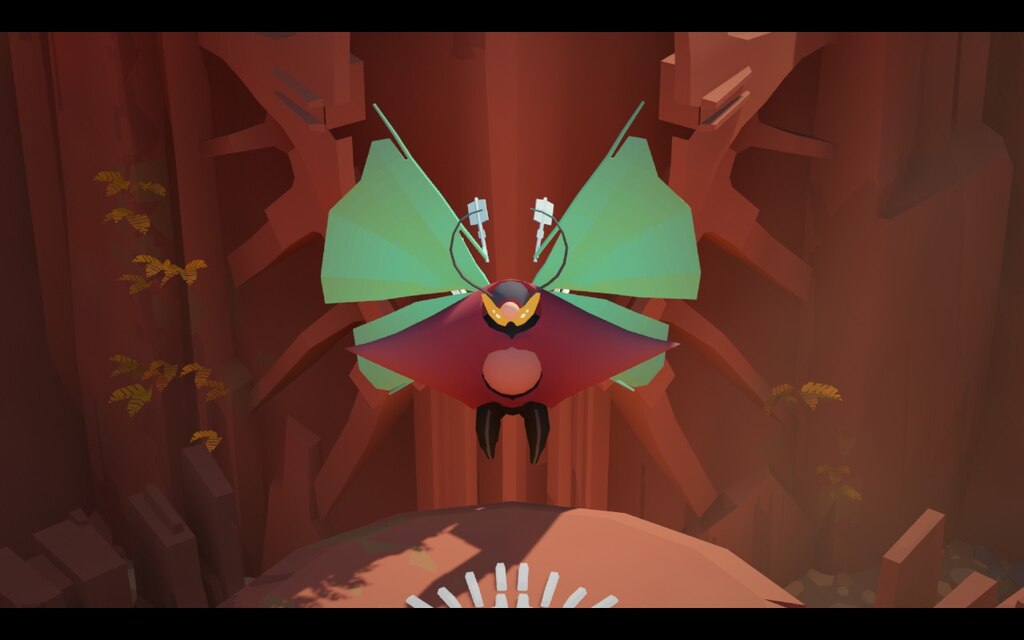
It’s a good job that the core gameplay premise of Cocoon is so good, as I often found myself lost in trying to understand any of the wider narrative beats. Your motivation to press forward in this world of puzzles is largely driven by your own desire to discover new landscapes in this admittedly stunning alien world, especially because there’s no clear guidance or explanation of the larger story at play. That’s not an issue in itself, and the mystery of it all definitely adds to the overall atmosphere, but if you’re expecting any solid storylines here you will be disappointed.
In the spirit of Dory from Finding Nemo, ‘just keep solving, just keep solving.’ Perhaps the point of Cocoon is to highlight the inevitable reality of being part of a much bigger machine. How many of us can truly say we have much understanding of our role within the bigger picture of our neighbourhoods, countries and so on. It’s an interesting comparison to make, but one that really stuck with me as I was wrapping up my time in Cocoon. I always find that games like these are designed to be interpreted how you wish, but maybe I am wrong, who knows!
When all is said and done, Cocoon is a truly wonderful puzzle-platformer, and one I can wholeheartedly recommend to anyone who is drawn to its mind-bending worlds inside of worlds concept, or the gorgeous environments that are begging to be explored, and maybe even understood. It’s relatively short too, so there’s no reason you can’t squeeze it in a busy gaming schedule, running in at about 5/6 hours of tight puzzle solving. Jeppe Carlsen has had a hand in creating another brilliant experience, and I wait with baited breath to see what he cooks up next.
 Tom's World
Leave a comment