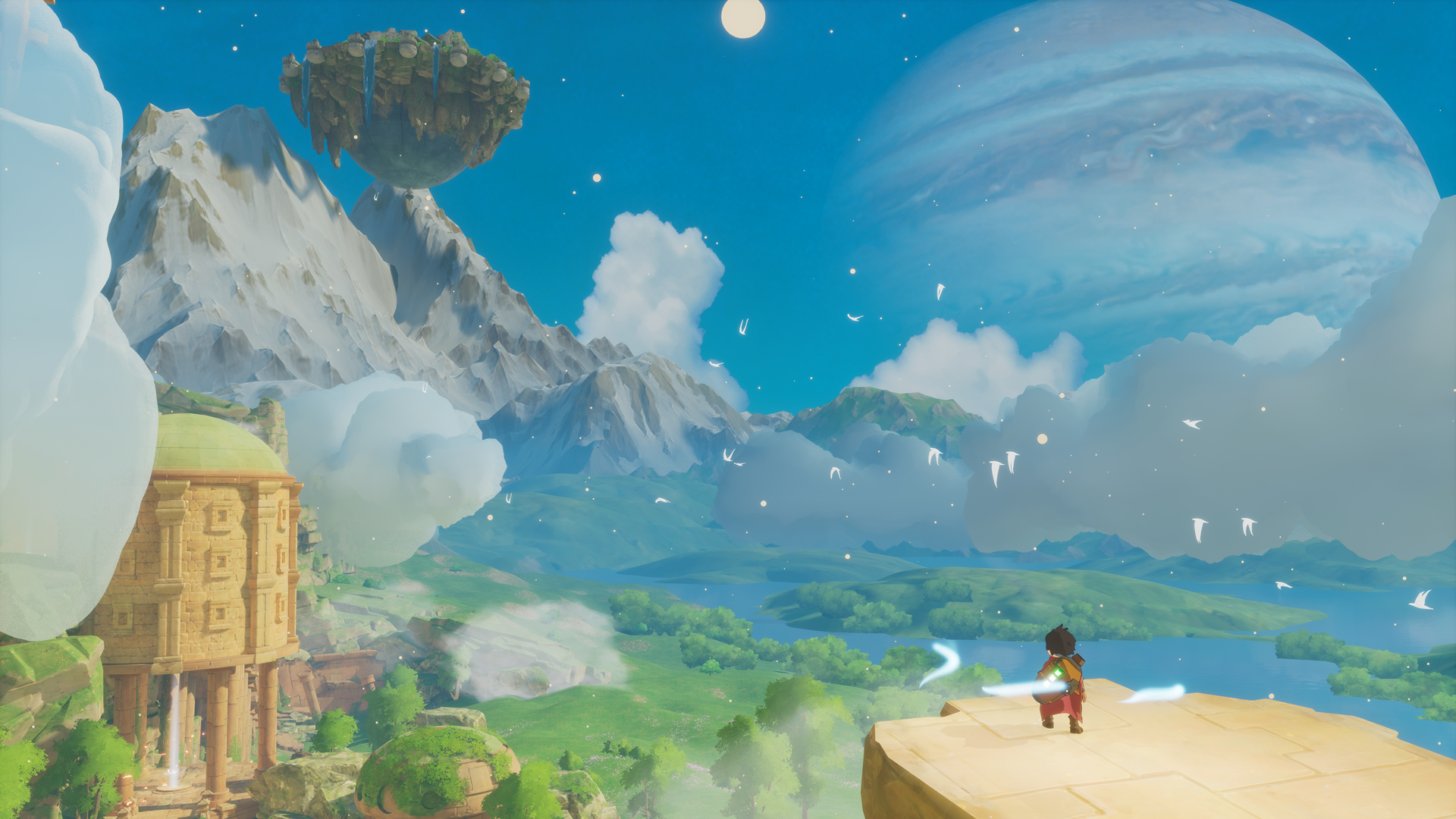
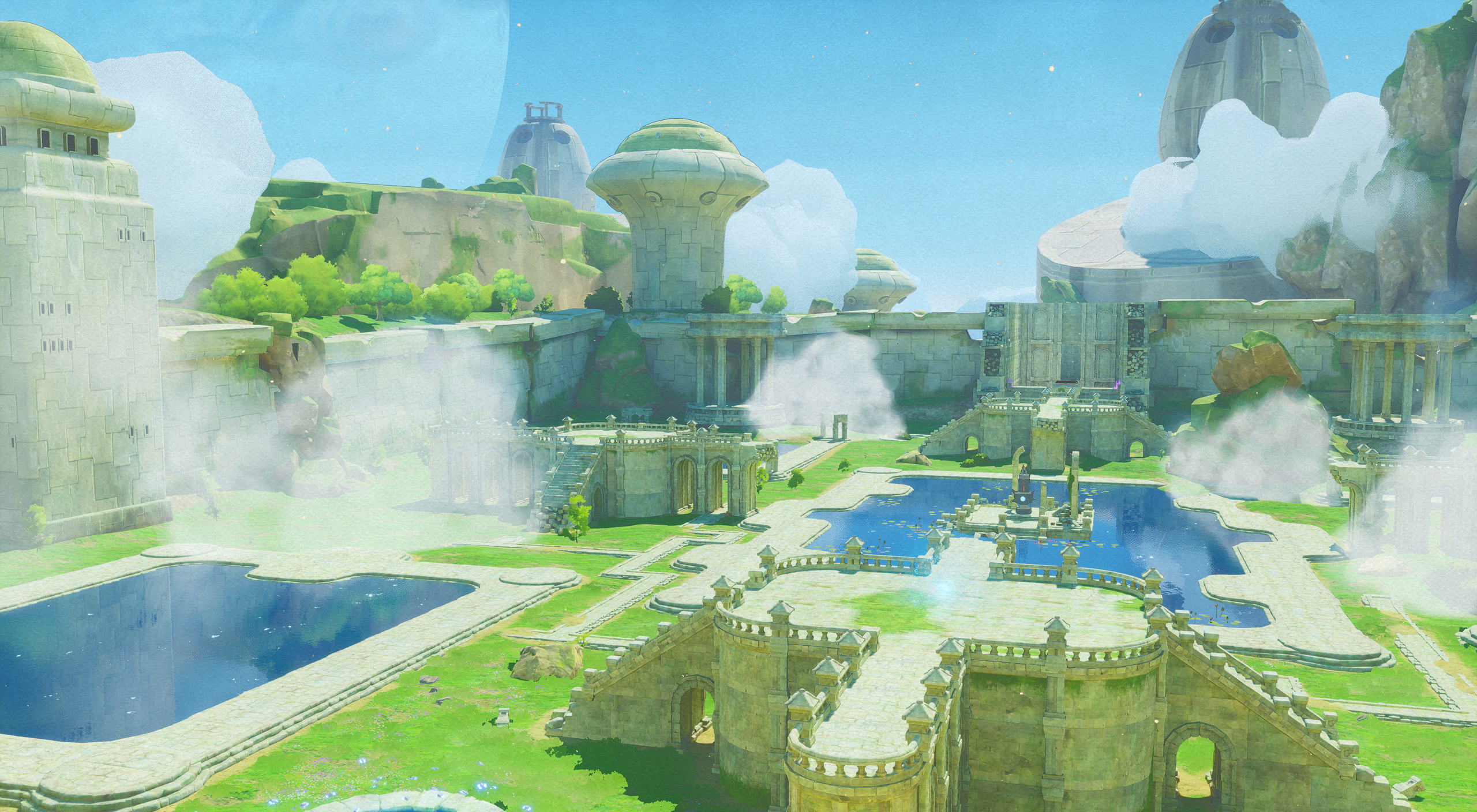
Your first moments in Europa, an exploration-based adventure game from Helder Pinto & Novadust Entertainment, will likely be spent taking in the glorious landscapes that immediately meet the game’s protagonist Zee. Set on the terraformed moon of the same name, lying in the shadow’s of Jupiter, Europa creates a strong first impression, presenting you with an open landscape that practically begs you to dive (quite literally at times) into it.
Across the course of this 4/5 hour adventure my exclamation at the beauty of the environments I found myself in was rarely lost on me, and its a testament to both the game and the team behind it that such a powerful introduction to Europa was, in hindsight, just a sign of things to come. It’s almost akin to that moment in Link’s emergence from the cave in Breath of the Wild, and is equally as magical.
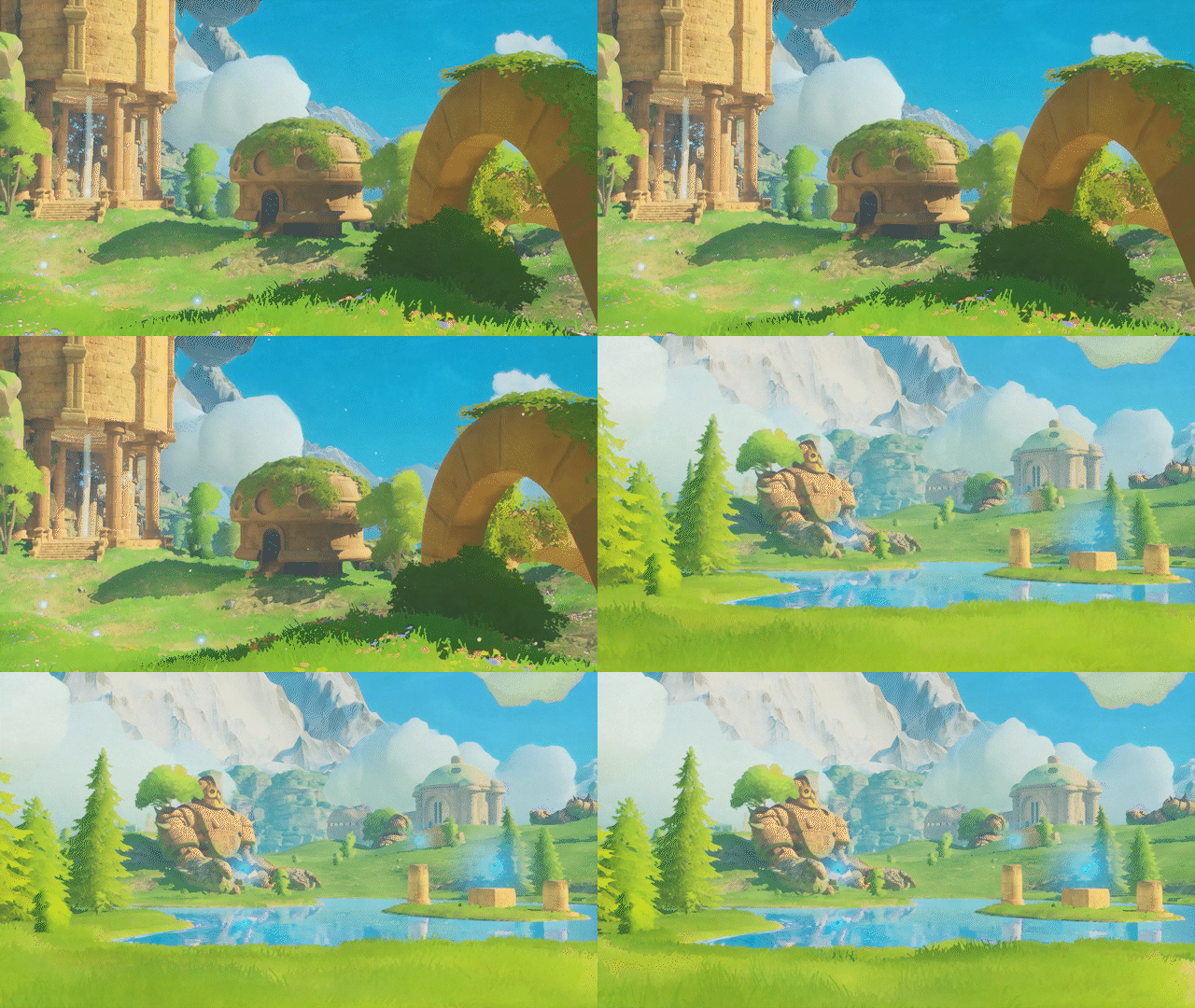
Europa‘s strengths lie in other places too though, with the distinct visual presentation often acting as second fiddle at times to incredibly poignant storytelling and a delightful movement system that is worth the entry fee alone. The fiery spirit that resides within independent gaming burns bright in Europa; an empathetic tale that equal parts challenges our views on nature and delights our senses at the same time.
Fly me to the moon
After stepping out into Europa’s first locale you’ll quickly become accustomed to its combination of jumps, glides and boosts that form the game’s core movement system, and my my, are they a joy to play with. Soaring past ruined towers and swooping under bridges is enjoyable from minute one to Europa’s conclusion, and I was surprised by how intuitive it felt to control Zee, especially taking into consideration the game’s indie foundations.
In comparison, on the ground movement feels much more sluggish, and is perhaps a natural consequences of Europa’s desire to push its players into making the most of it’s airborne experience. It doesn’t detract much from the overall experience, but such a stark difference between the smoothness of both forms of movement feels odd when you’re in the moment to moment gameplay that often necessitates continuous use of both styles.
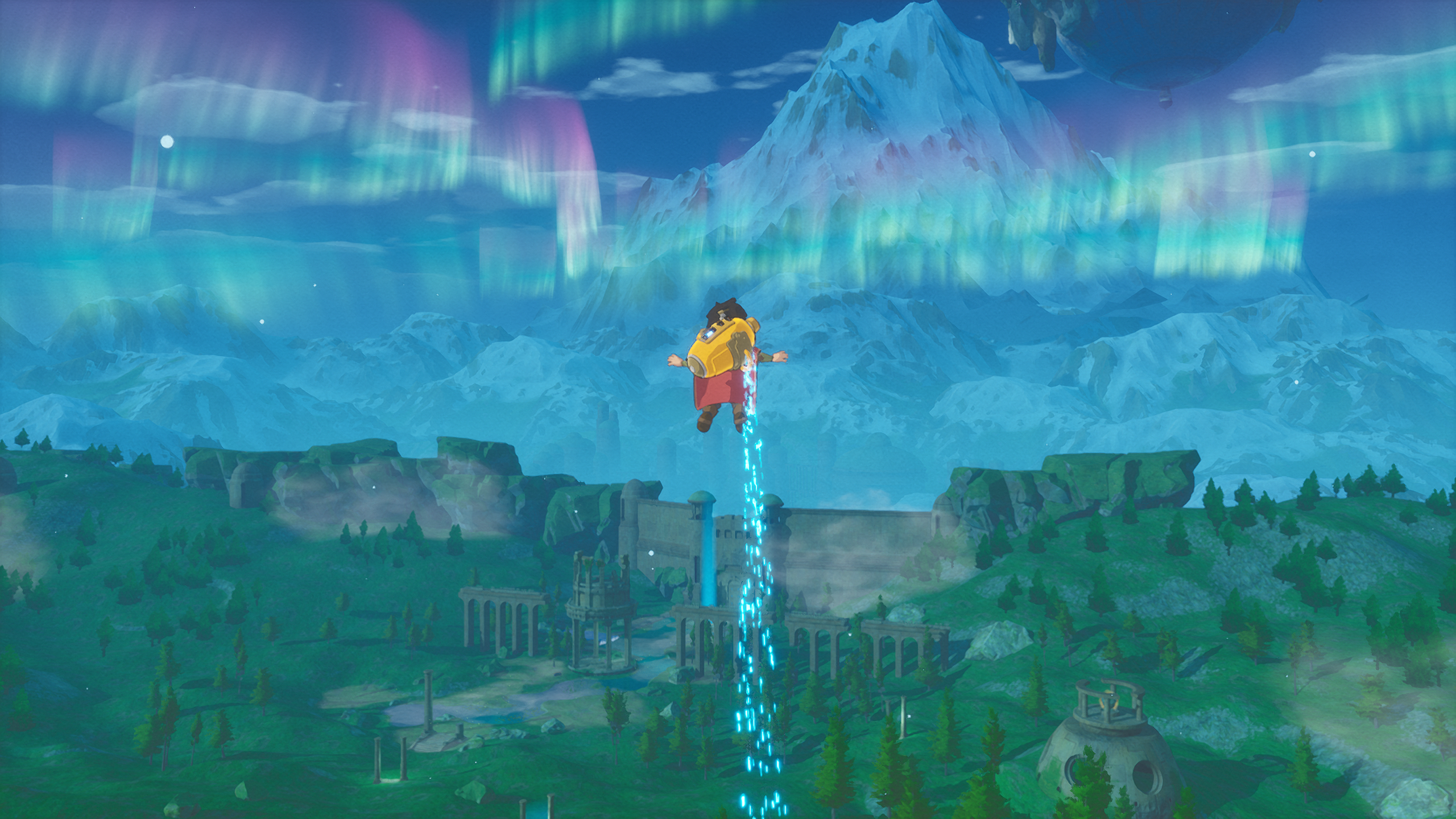
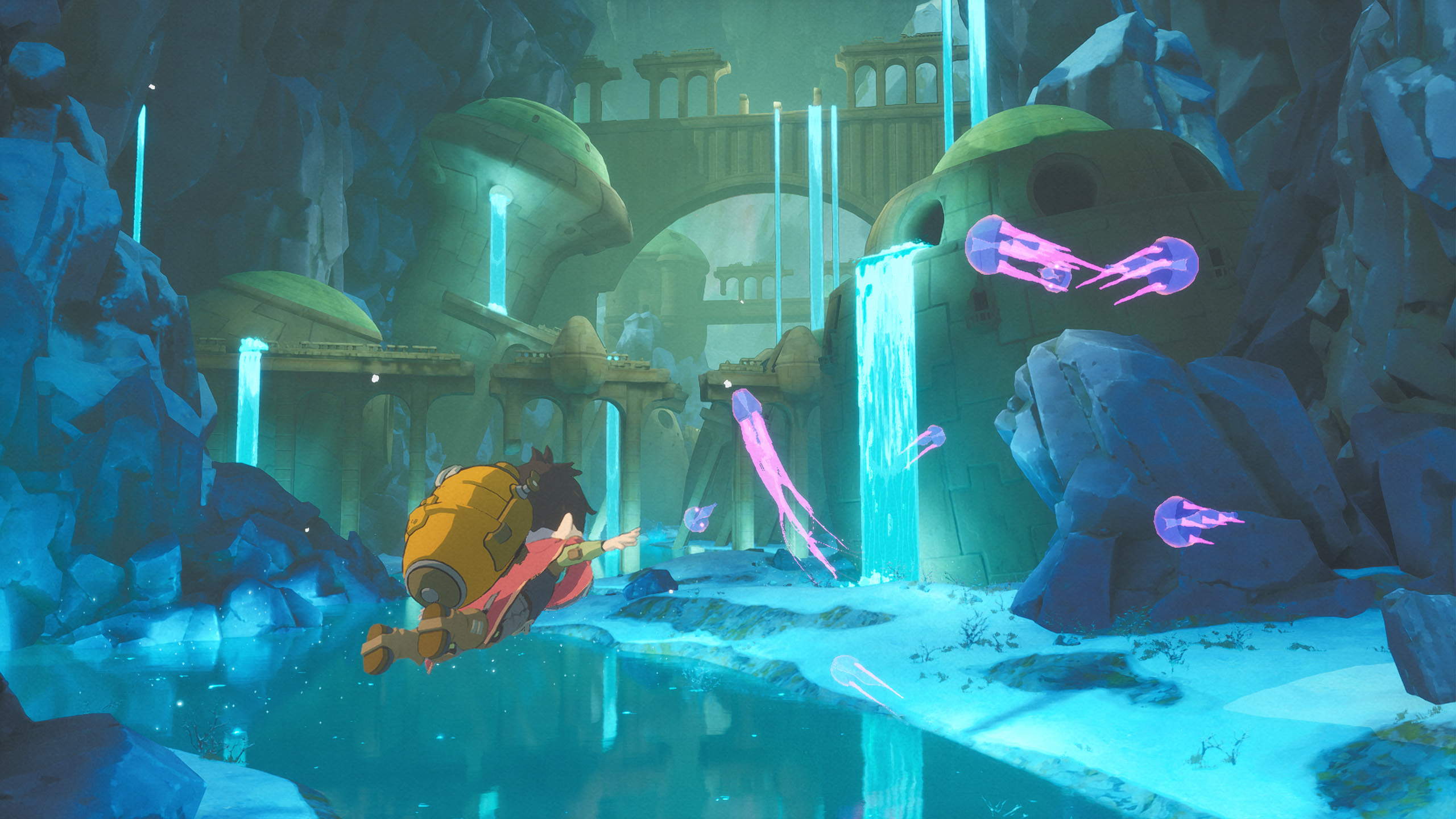
As you advance further into Europa, you’ll encounter crystals which will offer you the ability to power up the jetpack donned by Zee, essentially allowing you to have a longer boost and unlock even more air time. It’s an intelligent way to slowly expand the player’s movement capabilities in a fairly natural way, and is a strong incentive to search out the more off the beaten path trails in order to ‘level up’ this aspect of the game.
Also worth noting is the presence of what are essentially recharge points littered across each zone you’ll explore that allow you to chain together endless volumes of air time if you’re astute enough to identify the best paths to take. It’s this emphasis on delivering a player-first experience that makes Europa such a joy to play, I’ll touch on difficulty later, but it’s important to recognise that the mission statement isn’t about punishing players, but presenting the tools with which they can sit back and just take in the game’s world, one soaring movement at a time.
Puzzling Inclusions
If Europa’s movement is the main course of gameplay, it’s puzzles are the equivalent of the after-meal coffee that isn’t needed but feels like a worthy enough inclusion that you may as well indulge. Let’s get one thing straight, Europa’s puzzles are going to leave your scratching your head for hours, but instead they act as ways to break up the wider movement-driven sequences by slowing down the overall pace and introducing small road blocks in your journey.
At it’s most basic we’re working with simple block moving puzzles, opening gates by collecting small orb-like entities (which often involve simplistic platforming), and lighting torches hidden around a smaller part of one of the game’s many zones amongst others. They fulfil their role well enough, and I think are understated by design, allowing your focus to quickly be placed back on the traversal sequences without outstaying their welcome.
That does beg the question of why they are included though, and this is a question that rears its head a few times and sees Europa lose parts of its identity in my opinion. Whilst these puzzles act as one form of obstacle, an even greater one comes in the form of the “Gardeners” that call the Moon their home, and act as disruptive forces through disabling your jetpack or blasting you out the sky. The presence of these creatures leads to a real juxtaposition as you play, and with no real penalty for being affected by them it becomes more of an annoyance than anything. Europa is, by design, a mediative experience, but one often hampered by this very inclusion.
It’s a shame because when you’re not being blasted by these creatures they’re often quite charming to simply sit back and observe. I feel the violent nature of some of these creatures is an attempt to bring gameplay and some of the later story elements together, but it feels sloppy and is my biggest issue with Europa as a whole.
See It, Sketch It
Luckily, there’s plenty of that previously mentioned opportunity to stop for a second and watch the various creatures that call the Moon of Europa their home go about their lives. At times it’s like watching a nature documentary with the soothing words of David Attenborough, and Europa encourages you to appreciate the numerous forms of wildlife through a simple sketch mechanic that lets you keep track of every encounter through a Bestiary. I was slightly let down by the lack of depth this feature offered, leading it to become a small distraction more than anything, but I appreciated its inclusion, and the drawings themselves are fantastic.
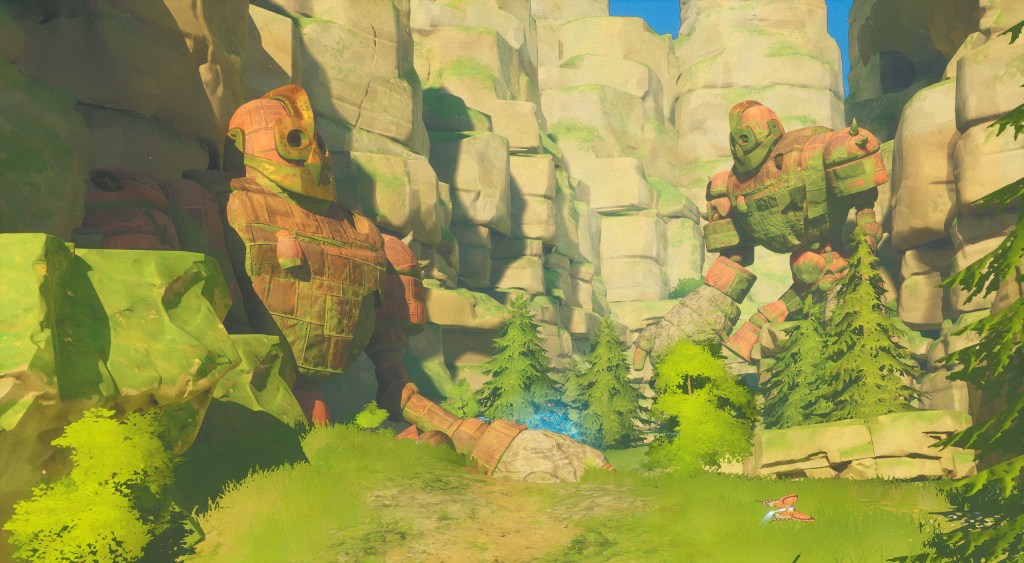
Despite the shallowness of the mechanic I do think it does the important job of pushing you to slow down and take in the locations Europa guides you through. It truly is a beautiful game, and the creature designs are delightful, it’s well worth the time to stop for a second and watch them, even if just for a moment.
Humanities Nature
Where Europa is truly outstanding is in its narrative, delivering a strong and poignant message that is littered with allegories to climate crises and the innate desire of people to protect those they love. The story is presented to you via a series of notebook pages that you collect during your adventure, which are beautifully narrated by a character who is named as Zee’s father. It’s incredibly heavy subject matter to discuss in a game which on the surface can appear ‘cozy’ and laidback, but I feel Europa is able to deliver it with another deft to justify the decision to use such themes, and I ended my journey on this Moon with a twinge of sadness within me.
Despite nature’s beauty surrounding you at every moment, ongoing story beats provide constant reminders that this version of the Moon was one that had recovered from the impact of humanity upon it, and was a stark reminder of the fragility within which our own, very real world, sits. Seeing Zee’s father despair in the ignorance of his fellow settlers who continue to fight against the very creatures who worked to make Europa a place hospitable for them is difficult to process even when considering such events took place long ago as we hear them back. It is in its narrative that Europa really shines, and to me it made me recognise the level of passion that went into its development, and the clear message its developers wanted to deliver.
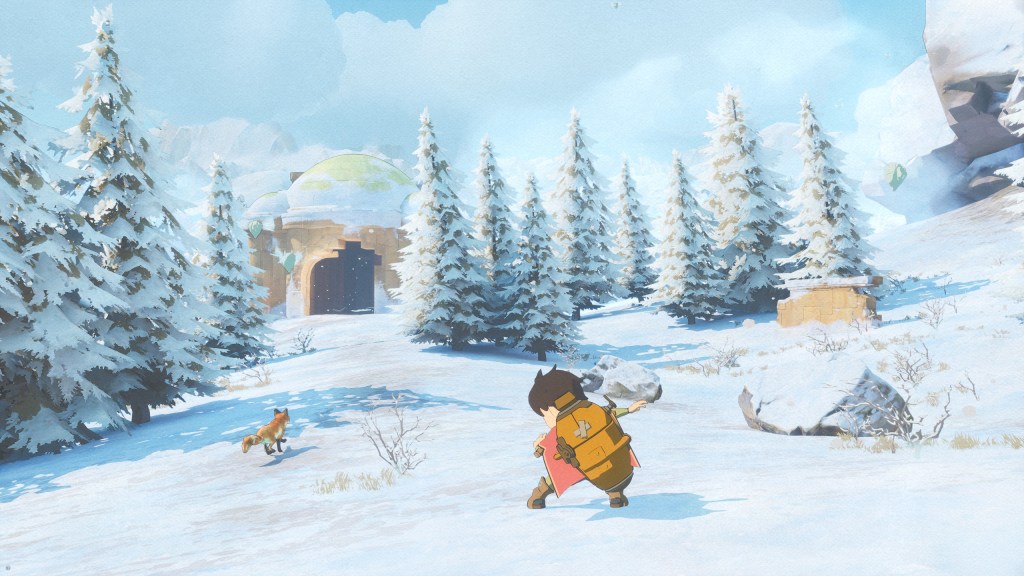
One beautiful moment in particular which has stayed with me was a late-game sequence where a lone fox guides you through various environments, concluding with it settling down into a corner with its partner and cubs. As the notebook of your father detailed more and more conflict, danger, and destruction, Zee encountered new life, just before the conclusion of his journey.
Conclusion
Europa is a beautiful game, and at its best its a shining example of the capability video games possess to immerse players in fantastic narratives. It handles a mature subject mature with real nuance, and alongside an exquisite core traversal system is hard not to recommend. Unfortunately, where it stumbles most is when it steps away from these strengths, rather ironically the attempts to “gamify” this experience through perceived threats and simple puzzles are where it is weakest.
Even so, I had a truly wonderful time playing Europa. It’s ability to deliver euphoric moments of soaring through its gorgeous environments alongside a strong message regarding humanities relationship with the natural world is brilliant. Give it a try, I’d love to hear your own thoughts.
 Tom's World
Leave a comment